
When the topic of blood glucose arises, it’s common for our minds to link it solely to diabetes and dismiss it altogether if we have had no history of high blood glucose levels. However, the significance of maintaining stable blood glucose levels extends far beyond diabetes. In this article, I will delve into the reasons why.
What is Blood Glucose?
Blood glucose, also known as blood sugar, is the main sugar found in your blood. It comes from the food we eat and is our body’s main source of energy, essential for the functioning of all bodily cells.
Here’s a more detailed breakdown:
- Sources of Blood Glucose: The carbohydrates in the food we eat are broken down into glucose, a simple sugar, also called a monosaccharide, which enters the bloodstream. This is why after we eat, especially foods high in carbohydrates, our blood sugar levels rise.
- Role in the Body: Glucose in the blood is used by our body’s cells for energy. It’s essential for our muscles and organs to function properly. Our brain, which cannot store glucose, relies heavily on a continuous supply from our bloodstream to operate effectively.
- Regulation of Blood Sugar: Several hormones are involved in maintaining stable levels of glucose in the blood, but the main ones are insulin and glucagon. When we eat, insulin is produced by beta cells in the pancreas to help the distribution, absorption, and storage of glucose in the cells and organs so it can be used as energy. This lowers the glucose in our bloodstream, bringing our blood sugar level back down to a normal range. When glucose levels are low, glucagon activates the usage of glucose stored in the liver to produce energy.
- Importance of Balance: Maintaining a balance in blood sugar levels is crucial. High blood sugar (hyperglycaemia) can lead to long-term complications such as Type 2 diabetes, cardiovascular disease, and nerve damage. Low blood sugar (hypoglycaemia), on the other hand, can cause immediate dangers such as dizziness, confusion, and even loss of consciousness.
- Dysregulation and Health Issues: Impairment in insulin production in our body can cause serious health issues. For example, Type 1 diabetes occurs when the body doesn’t produce enough insulin to regulate glucose levels effectively. The causes of type 1 diabetes are still unclear, but it is believed that environment and genes play a role. It is irreversible, and patients depend on insulin medication to keep it under control. On the other hand, type 2 diabetes occurs when the pancreas doesn’t produce enough insulin or the cells don’t use insulin effectively, leading to constant high levels of blood sugar. Type 2 diabetes is mainly caused by lifestyle such as dietary patterns and lack of physical activity and is reversible with adequate lifestyle changes.
Why is it important to maintain stable levels of blood sugar?
Maintaining stable blood sugar levels offers numerous benefits for overall health and well-being. Here are some of the key advantages:
- Reduced Risk of Diabetes and Its Complications: Stable blood sugar helps prevent the development of type 2 diabetes. For those already diagnosed with diabetes, stable blood sugar is crucial in managing the condition and reducing the risk of complications such as heart disease, kidney failure, and nerve damage.
- Weight Management: Maintaining stable blood sugar levels can help in weight management. When blood sugar levels spike, it often leads to cravings and overeating. A stable blood sugar level helps regulate appetite and can reduce cravings for sugary and high-carbohydrate foods.
- Enhanced Energy Levels: When blood sugar levels are stable, our body can efficiently use glucose for energy. This leads to more consistent energy levels throughout the day, avoiding the highs and lows often experienced with fluctuating blood sugar.
- Improved Mood and Mental Health: Blood sugar fluctuations can significantly affect our mood and mental health. Stable blood sugar helps in maintaining a more balanced mood, reducing feelings of irritability and anxiety, and lowering the risk of depression.1
- Better Concentration and Cognitive Function: Stable glucose levels are essential for the brain, which relies on glucose as its primary energy source. When blood sugar levels are steady, we may experience improved concentration, sharper memory, and overall better cognitive functioning.
- Reduced Risk of Chronic Inflammation: Chronic high blood sugar can lead to inflammation, which is linked to various health problems like arthritis, Alzheimer’s disease, and certain types of cancer. Stable blood sugar levels help in reducing chronic inflammation.2
How can I support stable levels of blood glucose?
- Eat a breakfast that is protein-rich and includes healthy fats instead of eating a carbohydrate-rich breakfast. For example, eating eggs and avocado on a slice of sourdough bread helps prevent a fast glucose spike compared to having a cereal or toast-based breakfast. Studies have shown that eating a high-fat and protein, low-carbohydrate breakfast resulted in participants feeling fuller for longer and eating less at lunch and dinner compared to those who ate a high-carbohydrate breakfast 3,4. Another study including diabetic participants showed that eating a breakfast high in fat and low in carbohydrates, alongside a well-balanced lunch and dinner, helped maintain stable blood glucose levels for the next 24 hours5.

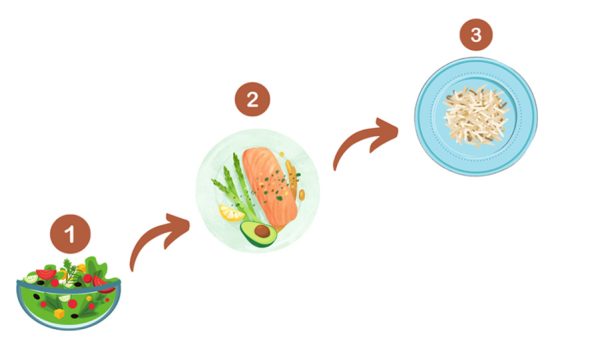
- Eat vegetables and salads, followed by protein and fats before carbohydrates. It is a misconception that “everything gets mixed in our stomach, so it doesn’t matter the order in which we eat”. Eating foods rich in fibre such as vegetables6, followed by protein and fat will delay the digestion of carbohydrates, when eaten last, due to slowing its digestion, that would happen fast when eaten alone or first.
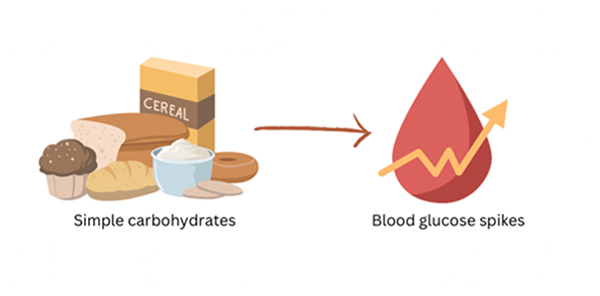
- Choose complex carbohydrates instead of simple carbohydrates: simple carbohydrates such as white rice, pasta and bread cause blood glucose to rise fast, while complex carbohydrates such as wholegrain rice, quinoa, wholemeal pasta and bread, because of their higher fibre content are absorbed more slowly and result in a slower rise in blood glucose.
- Avoid eating sweets and drinking sweetened drinks on an empty stomach: if you fancy a piece of chocolate, the impact it will have on your blood sugar will be lower if you eat it after a meal than if you eat it in between meals.

- Practice physical activity: Physical activity (PA) affects the way our body regulates glucose. PA improves insulin sensitivity even after hours of practising it. In addition, a short walk or going up and downstairs for a few minutes after meals can help curb blood glucose spikes.
In conclusion, understanding and managing blood glucose is crucial not just for those diagnosed with diabetes but for everyone aiming for optimal health and wellness. As we’ve explored, blood glucose, derived primarily from the carbohydrates we consume, serves as the body’s essential source of energy, influencing everything from our mood and energy levels to our risk of chronic diseases. By adopting strategies such as prioritising protein and healthy fats, selecting complex carbohydrates, and engaging in regular physical activity, we can support stable blood glucose levels.
This article is for educational purposes only and should not substitute medical advice.
References:
- Jacques, A., Chaaya, N., Beecher, K., Ali, S. A., Belmer, A., & Bartlett, S. (2019). The impact of sugar consumption on stress driven, emotional and addictive behaviors. Neuroscience and Biobehavioral Reviews, 103, 178–199. https://doi.org/10.1016/j.neubiorev.2019.05.021
- Ma, X., Nan, F., Liang, H., Shu, P., Fan, X., Song, X., Hou, Y., & Zhang, D. (2022). Excessive intake of sugar: An accomplice of inflammation. Frontiers in immunology, 13, 988481.
- Ratliff, J., Leite, J. O., de Ogburn, R., Puglisi, M. J., VanHeest, J., & Fernandez, M. L. (2010). Consuming eggs for breakfast influences plasma glucose and ghrelin, while reducing energy intake during the next 24 hours in adult men. Nutrition research (New York, N.Y.), 30(2), 96–103. https://doi.org/10.1016/j.nutres.2010.01.002
- Chandler-Laney, P. C., Morrison, S. A., Goree, L. L. T., Ellis, A. C., Casazza, K., Desmond, R., & Gower, B. A. (2014). Return of hunger following a relatively high carbohydrate breakfast is associated with earlier recorded glucose peak and nadir. Appetite, 80, 236–241. https://doi.org/10.1016/j.appet.2014.04.031
- Chang, C. R., Francois, M. E., & Little, J. P. (2019). Restricting carbohydrates at breakfast is sufficient to reduce 24-hour exposure to postprandial hyperglycemia and improve glycemic variability. The American journal of clinical nutrition, 109(5), 1302–1309. https://doi.org/10.1093/ajcn/nqy261
- Imai, S., Fukui, M., & Kajiyama, S. (2014). Effect of eating vegetables before carbohydrates on glucose excursions in patients with type 2 diabetes. Journal of clinical biochemistry and nutrition, 54(1), 7–11. https://doi.org/10.3164/jcbn.13-67