The third in a series on the Three Systems of Compounding Health, building strength, clarity, and vitality for life. The gut-brain health in menopause matters more than at any stage of life.
A client came to me after her third course of antibiotics in eighteen months. Each time, the same pattern: a urinary tract infection, a prescription, temporary relief, and then another infection a few weeks later. Her health care provider had not mentioned that declining oestrogen changes the vaginal and urinary microbiome. This reduces the Lactobacillus bacteria that protect the urogenital tract, raises pH, and makes recurrent infection significantly more likely. Nobody had connected the antibiotics, each one further depleting her microbiome, to the brain fog, disrupted sleep, and digestive symptoms that had arrived around the same time.
She was not unlucky. She was underinformed by a system that does not yet routinely connect these dots.
This is the post that connects them.
The gut and brain are not separate organs that happen to coexist. They are in constant, bidirectional communication, exchanging signals through the nervous system, the immune system, the endocrine system, and a remarkable highway of nerve fibres called the vagus nerve. What happens in one happens, in some form, in the other.
For women in midlife, this connection is not abstract. It is the difference between waking up clear-headed or foggy, sleeping deeply or fitfully, feeling resilient or fragile for no apparent reason. It is the system that most women have never been told exists, let alone been given the tools to support.
What the gut-brain axis actually is
Most of us were taught that the brain runs the body. The gut, in this model, is a passive digestive tube. You eat, it processes, it moves things along.
The reality is considerably more interesting.
Your gut contains millions of neurons and its own nervous system, the enteric nervous system. It also hosts a microbiome of trillions of bacteria, fungi, and other microorganisms, active around the clock. These microorganisms produce neurotransmitters, regulate immune function, and influence hormone metabolism. They also send signals directly to the brain via the vagus nerve, the longest nerve in the body, running from the brainstem to the abdomen.
The communication runs both ways. Your brain influences your gut, which is why anxiety produces stomach symptoms. Your gut influences your brain, which is why a disrupted microbiome produces cognitive and emotional symptoms. Neither organ is in charge. They are in conversation.
How the four channels communicate
This conversation is mediated through four main channels. The vagus nerve carries electrical signals in both directions, with roughly 80% of the traffic travelling upward from gut to brain rather than downward. The immune system, with approximately 70% of immune tissue located in the gut, sends inflammatory signals that directly affect brain function. The endocrine system uses gut-produced hormones to regulate appetite, mood, and stress response. And the microbiome itself produces compounds including short-chain fatty acids, neurotransmitter precursors, and metabolites that influence brain chemistry.
Disruption to any one of these channels disrupts the others. And in perimenopause and menopause, all four are disrupted simultaneously.
What oestrogen has to do with your gut brain health
Oestrogen does not just govern reproduction. As we explored in the first article in this series on metabolic health, it is a systems’ hormone, present in receptors throughout the body including the gut lining, the enteric nervous system, and the brain itself.
In the gut, oestrogen plays several critical roles. It supports the integrity of the intestinal lining, maintaining the tight junctions between cells that keep the gut barrier intact. It influences the composition of the gut microbiome, favouring beneficial species over inflammatory ones. And it regulates the estrobolome or the collection of gut bacteria responsible for metabolising and recycling oestrogen back into circulation.
When oestrogen begins to fluctuate in perimenopause and then declines through menopause, each of these functions is compromised. The gut lining becomes more permeable. The microbiome loses diversity. Lactobacillus, the beneficial bacteria that protect the gut, vaginal, and urinary tract, declines significantly. And the estrobolome, the very system designed to help manage oestrogen, becomes less efficient at its job, creating a feedback loop that amplifies hormonal imbalance.
This is why recurrent UTIs, new food sensitivities, increased bloating, and digestive unpredictability so often arrive together in perimenopause. They are not separate problems. They are one system under pressure. And treating each symptom in isolation, as the antibiotics-without-context approach illustrates, can worsen the very system causing them.
The serotonin story: what you have probably been told, and what is actually true
You may have heard that the gut produces around 90% of the body’s serotonin. This is true. Enterochromaffin cells in the gut lining store and release the vast majority of the body’s serotonin, primarily to regulate gut motility, immune function, and signalling within the enteric nervous system.
What is less often said, and what matters enormously for how we understand the gut-brain connection, is that this gut-produced serotonin does not cross the blood-brain barrier in meaningful amounts. The serotonin that regulates your mood in the brain is synthesised in the brain itself, primarily in the brainstem.
So the relationship between gut serotonin and mood is real, but it is indirect. The gut influences brain serotonin primarily through three mechanisms: the vagus nerve, which carries gut signals upward to brain regions involved in mood and cognition; the supply of tryptophan, the amino acid precursor from which the brain makes its own serotonin; and immune and inflammatory signalling, which directly affects neurotransmitter production and brain function.
This matters because it means the goal is not simply to produce more serotonin in the gut. The goal is to maintain a healthy, diverse microbiome that keeps the vagus nerve well-signalled, tryptophan supply adequate, and systemic inflammation low. Those three things together support brain serotonin production, mood, sleep, and cognitive clarity more effectively than any single supplement.
What menopause does to the gut brain health directly
The gut-brain story does not exist in isolation. Menopause also affects the brain through a direct neurological pathway that is only now beginning to receive the scientific attention it deserves.
Dr Lisa Mosconi, a neuroscientist at Weill Cornell Medicine, has spent over a decade scanning the brains of women at different stages of the menopause transition using PET imaging. What she found was striking. Brain glucose metabolism, the measure of how efficiently the brain uses its primary fuel, drops by approximately 30% during the menopause transition. This decline is visible on brain scans and maps directly onto the cognitive symptoms women report: difficulty concentrating, memory lapses, mental fatigue, and the persistent sense of operating through fog.
The mechanism connects directly to oestrogen. Oestrogen receptors are distributed throughout the brain, and oestrogen plays a critical role in neuronal energy metabolism, blood flow, and neuroplasticity. When oestrogen declines, the brain’s ability to use glucose efficiently declines with it.
Here is the part that is genuinely hopeful, and that almost no one leading with the alarming statistics remembers to mention: for most women, brain biomarkers largely stabilise after the menopause transition, and grey matter volume partially recovers in key regions. The brain adapts. The fog of perimenopause does not have to be the fog of the rest of your life.
But the window of the transition matters. And what you do during it, nutritionally, physically, and in terms of sleep, directly influences how your brain navigates the transition and what it recovers to.
Blood sugar, oestrogen, and your brain
Compounding this further is the blood sugar instability that accompanies declining oestrogen, as covered in the first article in this series. Glucose swings do not just affect your energy. They affect your brain directly. A sharp drop in blood sugar temporarily reduces cerebral blood flow and deprives neurons of their primary fuel. Over time, chronic insulin resistance, which becomes more common after 40 as oestrogen falls, impairs the brain’s ability to take up glucose efficiently. This is not a separate problem from the metabolic decline Dr. Mosconi’s research identifies. It is the same problem arriving through a different door. Stable blood sugar is not just a metabolic goal. It is a cognitive one.
Brain fog is not in your head. It is in your biology.
Studies suggest that up to 60% of women experience cognitive symptoms during the menopause transition. For many of these women, the first response they receive from a healthcare professional is either dismissal or a prescription for antidepressants.
In my view, telling a woman that her brain fog is simply anxiety, when there may also be changes such as reduced brain glucose metabolism, shifts in the gut microbiome, altered vagal signalling, increased inflammation, and disrupted sleep, overlooks important pieces of the picture. This can delay understanding and support that may help women protect their cognitive health earlier.
The cognitive symptoms of perimenopause are neurological. They have measurable biological causes. And they respond to biological interventions: nutrition, movement, sleep, and a gut microbiome that is functioning as it should.
What this looks like in real life
I see this in practice. A client who came to me struggling with persistent brain fog and digestive symptoms made one sustained change: she became intentional about hitting 30 grams of protein per meal, 30 grams of fibre per day, and 30 different plant foods per week, and she removed highly processed foods and alcohol. Within weeks, her digestion improved. So did her mental clarity. She had not treated two separate problems. She had supported one system, and both ends of it responded.
Understanding the gut-brain connection is not just validating. It is actionable.
The glymphatic system: why sleep is a brain health intervention
One of the most important discoveries in neuroscience in the last decade is the glymphatic system, a network of channels around brain blood vessels that activates during deep sleep to flush out metabolic waste products, including the amyloid beta proteins associated with Alzheimer’s disease.
During deep sleep, the brain’s glial cells contract, expanding the spaces between them and allowing cerebrospinal fluid to flow through and carry waste out. This process is the brain’s overnight cleaning system. Without adequate deep sleep, waste accumulates. Over years, that accumulation matters.
For women in perimenopause and menopause, this matters enormously. Hot flashes, night sweats, anxiety, and the hormonal changes driving the transition all fragment sleep architecture. These reduce the proportion of deep, restorative sleep. The glymphatic system cannot do its job. Cognitive symptoms worsen.
Sleep is not a lifestyle preference
It is a neurological intervention. Protecting it, specifically the deep sleep phases, is one of the most direct things a midlife woman can do for her long-term brain health.
Caffeine deserves a specific mention here. Its half-life can be up to 12 hours in some individuals, meaning caffeine consumed at 2pm may still be active in your system at midnight, suppressing the deep sleep your brain needs to clear itself. Over months and years, consistently disrupted glymphatic clearance is not a minor inconvenience. It is a meaningful accumulation of waste the brain never fully cleared.
How to support your gut-brain health in menopause: the foundations that compound
Feed your microbiome before you supplement it
The gut microbiome responds to what you eat within days. This is one of the most important facts in nutritional science. It means the trajectory is reversible faster than almost anyone expects.
The most powerful thing you can do for your microbiome is to eat more plants, more fibre, and more diversity. Thirty different plant foods per week, counting vegetables, fruit, whole grains, legumes, nuts, seeds, herbs, and spices, is the target associated with the greatest microbiome diversity in research. This does not require exotic ingredients. It requires intention and variety.
Why fibre matters more than supplements
Fibre, particularly the fermentable fibre found in legumes, oats, garlic, onions, asparagus, and Jerusalem artichokes, feeds the beneficial bacteria that produce short-chain fatty acids including butyrate. Butyrate fuels the cells lining the intestine, maintains the gut barrier, regulates immune function, and reduces systemic inflammation. Its decline post-menopause is one of the mechanisms connecting hormonal change to brain symptoms.
Fermented foods, sauerkraut, kimchi, miso, and live culture foods, add beneficial bacteria directly. They do not replace diversity of plant foods, but alongside them they meaningfully support microbiome resilience.
Protein is the building block of neurotransmitters too
The gut-brain axis runs on protein in ways most people have not considered. Tryptophan, the amino acid precursor to serotonin, comes from dietary protein. So does tyrosine, the precursor to dopamine and noradrenaline. Without adequate protein, the raw materials for brain neurotransmitter synthesis are limited regardless of how healthy your gut microbiome is.
As established in the first article in this series, aim to consume from 1.2 to 1.6 grams of protein per kilogram of body weight per day, with 1.6 grams appropriate if you are training. Distribute this across three or four meals. The gut-brain axis, like muscle protein synthesis, benefits from consistent supply rather than one large delivery.
Omega-3 fatty acids for the gut-brain connection
Omega-3 fatty acids, specifically EPA and DHA from oily fish, support both ends of the gut-brain axis. In the gut, they reduce inflammation and support the integrity of the intestinal lining. In the brain, they are structural components of neuronal membranes and are essential for synaptic function, mood regulation, and cognitive performance.
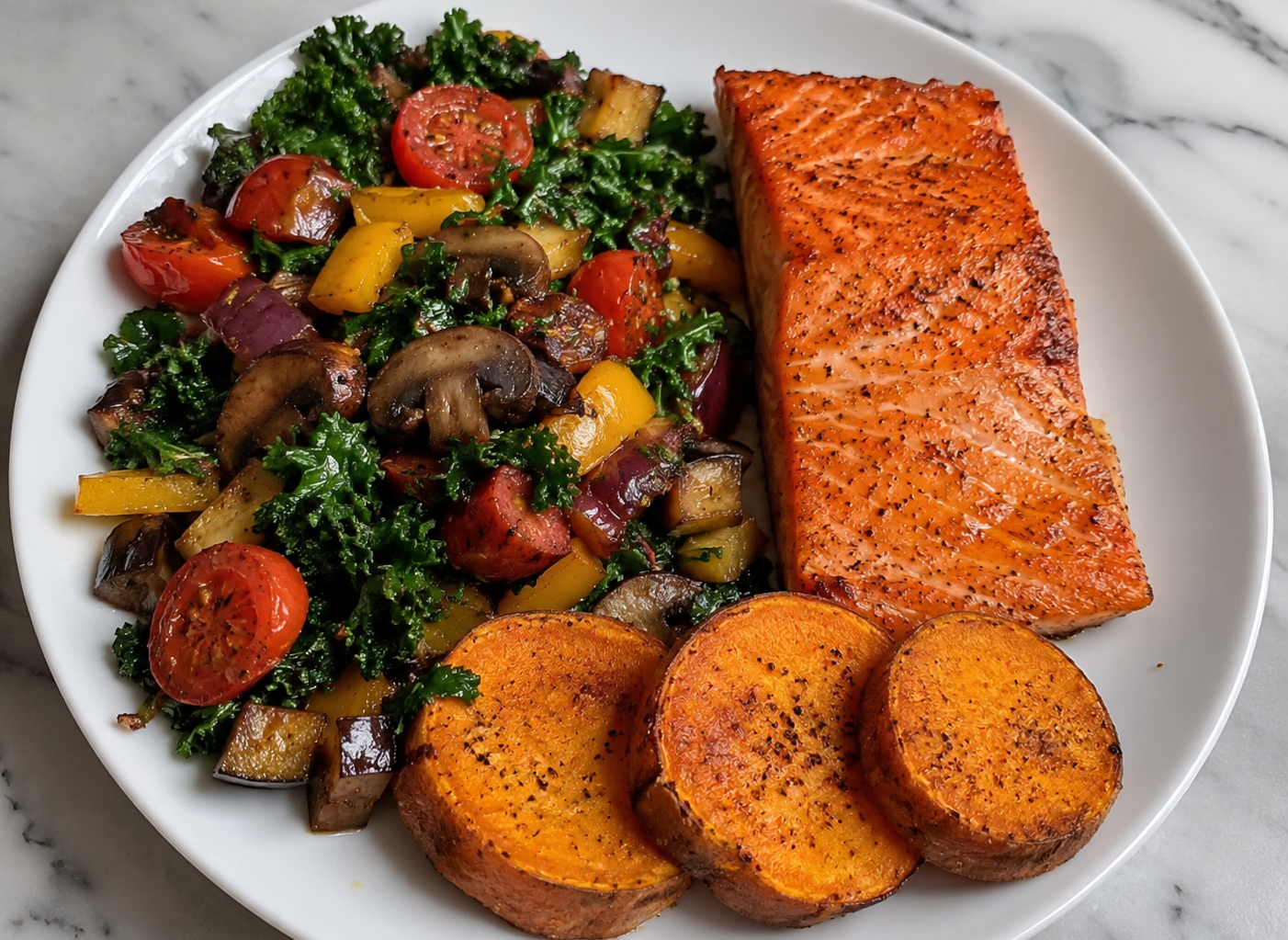
Research consistently associates adequate omega-3 intake with lower rates of depression, better cognitive resilience, and reduced inflammation, all directly relevant to the midlife brain. Aim for 1 to 2 grams of EPA and DHA daily from oily fish such as salmon, mackerel, sardines, and anchovies, with supplementation if dietary intake is consistently low.
The advice that is not advice
Telling a woman who is navigating perimenopause, running a household, managing a career, and possibly caring for both children and ageing parents to manage her stress is like telling a drowning person to swim. It identifies the problem without offering any meaningful mechanism for change.
Here is what the science actually says. Chronic stress, not the occasional difficult day but the sustained, low-grade pressure of a life with too many demands, shifts the gut microbiome toward inflammatory species and triggers increased intestinal permeability. It does this through cortisol, which directly alters gut bacterial composition, and through the stress response system’s effect on gut motility and immune function.
Furthermore, the loss of oestrogen in perimenopause reduces stress resilience at the neurological level. Women become more biologically vulnerable to the effects of chronic stress on the gut and brain at exactly the stage of life when external stressors are often at their peak.
The interventions that genuinely move this are straightforward: adequate protein to stabilise blood sugar because glucose instability is a physiological stressor, consistent resistance training which reduces chronic cortisol over time, sleep protection, and genuinely reducing the load where possible. Not coping with stress better. Reducing it structurally, by saying no, by asking for help, by treating recovery as non-negotiable rather than a luxury.
Creatine for brain energy
Creatine is best known as a muscle supplement, but emerging research points to a meaningful role in brain energy metabolism. Given that the menopause transition involves a measurable drop in brain glucose metabolism, the brain’s need for additional energy support becomes particularly relevant.
Creatine supports ATP production, the brain’s energy currency, and has shown promise in research on cognitive performance under stress, sleep deprivation, and ageing. For midlife women, it represents one of the few supplements with a plausible mechanism for directly supporting brain energy at a time when the brain’s primary fuel system is under pressure. The evidence is emerging rather than conclusive, but given its strong safety profile and the established muscle health benefits covered in the second article in this series, it is worth considering.
Magnesium for sleep and the gut-brain reset
Magnesium is involved in over 300 enzymatic reactions in the body and is frequently depleted in midlife women, particularly those under chronic stress. It supports deep sleep quality, reduces cortisol reactivity, and plays a role in gut motility and the vagal signalling that underpins the gut-brain connection.
Dietary sources include dark leafy greens, nuts, seeds, legumes, and dark chocolate. If dietary intake is consistently low, magnesium glycinate or magnesium threonate are among the most bioavailable supplemental forms. The latter is the only one to cross the blood-brain barrier.
What this looks like compounded over time
The woman in her 70s who is sharp, curious, emotionally resilient, sleeping well, and still fully engaged with her life did not arrive there by accident. She arrived there because of what she did in her 40s and 50s. Her gut microbiome was asking for diversity. Her brain was navigating the most significant neurological transition of her adult life. And the choices she made every day were either deposits or withdrawals from a system that would compound in one direction or the other.
Each meal rich in plant diversity is a deposit into microbiome resilience. Every gram of protein builds the neurotransmitter raw materials your brain depends on. Oily fish contribute to the anti-inflammatory environment that both the gut and brain need. Protected, deep sleep lets the glymphatic system do its essential work. And movement, every walk, every lift, every moment of genuine recovery, tells the nervous system: you are safe, you can rebuild.
This is not about perfection. It is not about a supplement stack or a clean eating programme. It is about understanding that the gut and brain are one system, that oestrogen was the glue holding it together, and that nutrition, movement, and sleep are the tools you now use deliberately to maintain what oestrogen once maintained automatically.
The fog is real. The biology is real. And so is the capacity to change it.
Your gut-brain health in midlife is not in decline. It is asking for a different kind of attention than it needed at twenty-five. Give it that, and it will carry your clarity, your resilience, and your joy a very long way.
This is the third and final article in the Three Systems of Compounding Health series. Part One: Metabolic Health, the system of energy and resilience. Part Two: Muscle and Bone Strength, the system of strength and independence.
White Space Nutrition is run by Daiana Primon, BSc (Hons) Nutrition, MSc Women’s Health (UCL). If you are experiencing brain fog, disrupted sleep, or digestive changes in perimenopause and want to understand what is actually happening and what to do about it, book a free discovery call here.
Disclaimer: This article is for educational purposes only. Always consult a healthcare professional before making changes to your diet and lifestyle.