What is included in this article?
- Definition of menopause and its phases
- Symptoms and diagnosis
- Available treatments and resources for more information
Menopause is a natural biological process that signals the end of the menstrual cycle and fertility. As women age, their ovaries undergo changes. The number of ovarian follicles, which contain eggs, declines. With fewer follicles remaining, the ovaries produce less oestrogen and progesterone, the hormones responsible for regulating the menstrual cycle and supporting fertility, therefore, it is no longer possible to become pregnant. All women who have had menstrual periods in their lifetime will go through menopause.
Most women go through natural menopause between the ages of 45 and 55 years, and this is largely attributed to genetics. However, your environment, nutritional habits and lifestyle also influence the time of menopause. The age of menopause also varies according to ethnic background. For example, Black, South Asian and Latinx women typically have an earlier start of menopause compared to Caucasian women.
Phases and symptoms of menopause:
Perimenopause
This transitional phase often begins several years before menopause itself. During perimenopause, oestrogen levels fluctuate, causing irregular periods, which may be accompanied by symptoms such as hot flashes and night sweats, also known as vasomotor symptoms, vaginal dryness, decreased libido, mood changes, joint pain, weight gain and psychological changes such as feeling depressed. Women experience menopause differently, and ethnic background influences symptoms. For example, Black and Latinx women have reported having more intense vasomotor symptoms than Caucasian women.
Menopause
Defined by 12 continuous months without a menstrual period. Oestrogen levels continue to drop, often but not always, leading to more pronounced perimenopausal symptoms (mentioned above) as well as urinary incontinence and change in body shape, with more fat being accumulated around the waist instead of the hips and thighs. Around 85 % of women report experiencing one or more of these symptoms.
Post menopause
Begins after menopause and lasts the remainder of a woman’s life. Symptoms may persist, and there is an increased risk of certain health conditions, such as osteoporosis and heart disease, due to low oestrogen levels.
Diagnosis of menopause
Menopause is typically diagnosed based on a woman’s age, symptoms, and menstrual history. If a woman between the ages of 45 and 55 starts experiencing symptoms such as irregular periods, hot flashes, night sweats, mood changes, or changes in libido, a doctor will typically diagnose it as perimenopause.
Early menopause
Going through menopause between the ages of 40 and 45 years is considered early menopause. In this case, it is important to seek medical advice. The treatment for early menopause is typically hormone replacement therapy (HRT) or combined pill to help prevent health problems such as osteoporosis that typically begin after menopause. However, if HRT is not suitable for you, for example, if you have had breast cancer, your GP will offer alternative treatments to help protect your health.
Premature menopause or premature ovarian insufficiency (POI)
- Women experiencing fewer periods and menopause symptoms before the age of 40 should seek medical help.
- Premature menopause occurs in 1 in 100 women aged 30 to 40 and 1 in 1000 women aged 30 and under in the United Kingdom (UK=
- Around 90% of cases of premature menopause are unexplained, and the remaining 10% are often explained by surgery such as the removal of ovaries, cancer treatment such as chemotherapy, auto-immune diseases such as underactive thyroid, genetic diseases and infectious diseases such as malaria.
- Diagnosis of premature menopause, besides the evaluation of symptoms, occurs through blood tests to measure follicle-stimulating hormone (FSH) levels in the blood. Your GP can refer you to take these tests.
- Treatment for premature menopause includes contraceptive pills or HRT to help delay health risks that naturally increase with ageing but should be low in women under 40. These include significant loss of bone mass, heart disease and breast cancer risk.
- HRT does not suit all women, for example, those with a family history of breast and ovarian cancer. If this is your case, your GP will find alternative treatments that best suit your needs.
Health implications
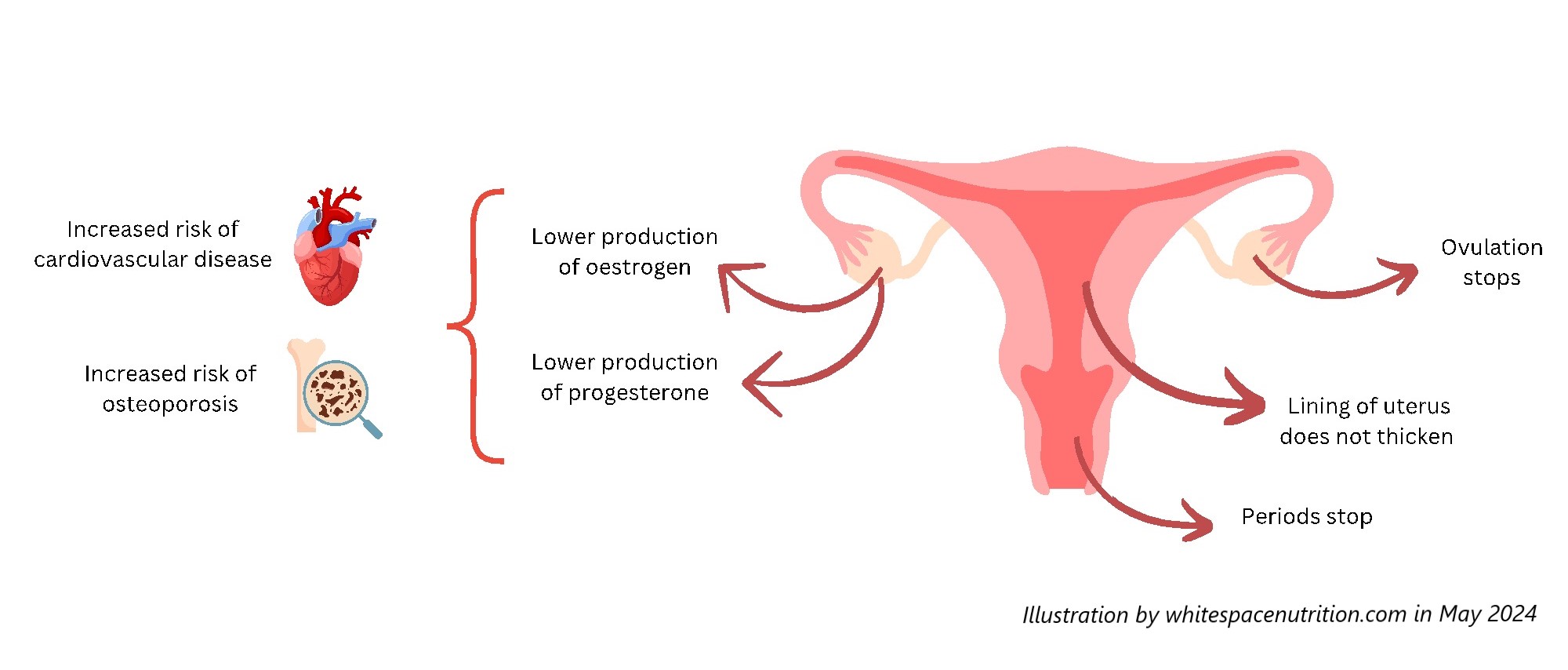
Due to oestrogen drop after menopause, post-menopausal women are at higher risk of developing osteoporosis and heart disease. Osteoporosis is a bone disease where the bones become more porous or weaker. Heart disease takes place when the veins and arteries that lead to the heart become narrowed or blocked. The risk of both osteoporosis and heart disease can be greatly decreased by maintaining a healthy weight, eating a healthy diet, and practising physical activity.
Lifestyle changes and treatments to support the menopause transition and beyond
Eat a healthy diet
Try and adhere to a healthy diet as much as possible, which is illustrated in the Eatwell guide below:
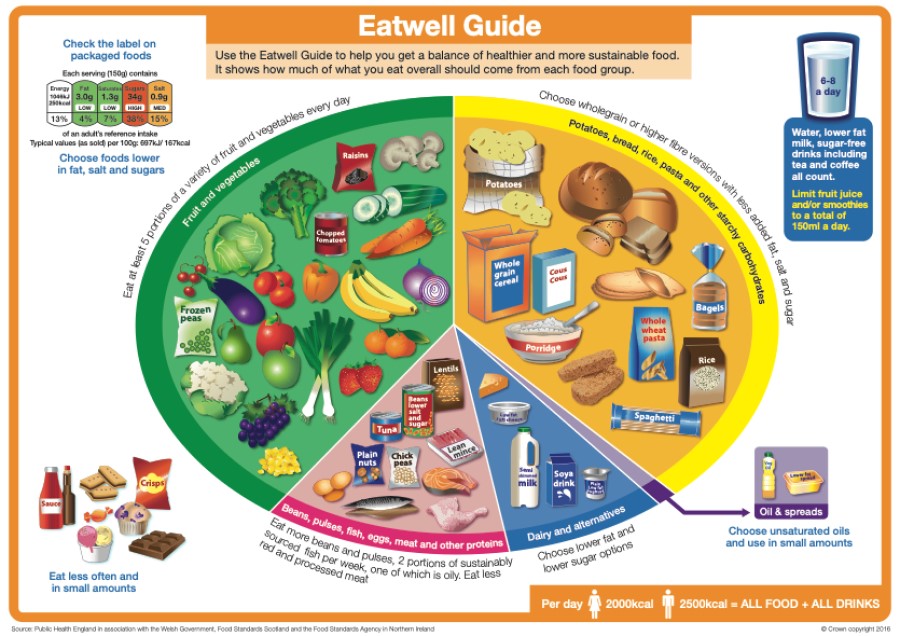
- What is on the Eatwell guide:
- Eat plenty of fruits and vegetables (at least five portions a day)
- Include wholemeal carbohydrates in each meal, such as brown rice, oats and wholegrain bread, instead of refined versions, such as white bread
- Include good sources of protein in each meal, such as beans, lentils, lean meat, chicken, fish, eggs, tofu
- Include small portions of dairy or alternatives in one or two meals a day, such as a piece of cheese or a small pot of yoghurt
- Limit the use of oils and fats. Choose unsaturated over saturated fats where possible. Unsaturated fats do not become solid when in cold temperatures, while saturated fats do. For example, butter is a saturated fat, while olive oil is an unsaturated fat.
- Keep consumption of overly processed foods such as crisps, biscuits and sweetened drinks to a minimum, if at all
- Drink at least eight glasses of water or non-sugary fluids per day
Limit alcohol consumption
Excessive alcohol intake can aggravate vasomotor symptoms, sleep quality and feelings of depression. Drink in moderation, if at all. For example, one glass of wine or a beer per day is considered moderate drinking, while two or more glasses a day is considered excessive drinking, which, in addition to worsening menopause symptoms, increases the risk of heart disease and certain types of cancer such as breast and colon as well and contributes to cognitive decline.
Stop smoking
Smoking can worsen hot flashes episodes and aggravate sleeping problems. Seek help from your GP to help you stop.
Practice physical activity
Aim to incorporate regular physical activity into your routine. It is recommended to take part in 150 minutes of moderate physical activity or 75 minutes of intense physical activity per week, as well as a minimum of two sessions of weight-bearing exercise. The latter is especially important to maintain bone health and decrease the risk of osteoporosis during menopause, while aerobics type of physical activity is great for heart health. Moderate physical activity means you can still talk while practising it, but you would be breathing fast. When practising intense physical activity, you are not able to continuously talk.
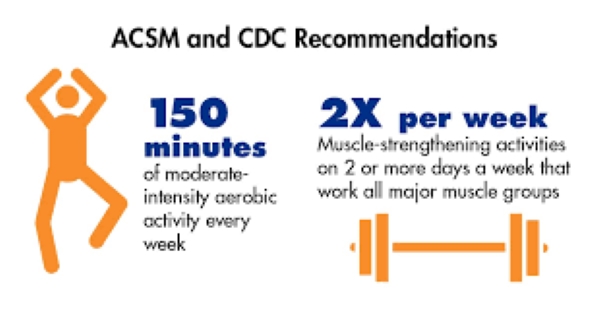
(Image from the American College of Sports Medicine)
Hormone Replacement Therapy (HRT)
HRT has been shown to be the most effective treatment for symptoms associated with menopause, such as vasomotor symptoms, vaginal dryness, and mood changes. It involves taking medications that contain female hormones, usually oestrogen and progestin, or sometimes oestrogen alone for women who have had a hysterectomy (uterus removed).
However, it’s crucial to be mindful of potential side effects before opting for it. When weighing the decision of whether to pursue HRT, consider both its advantages and disadvantages. Always ensure that the advantages outweigh the potential disadvantages to make an informed choice.
Advantages:
- Effective to treat vasomotor symptoms, vaginal dryness, disrupted sleep patterns, and depression symptoms.
- Helps protect against osteoporosis.
Disadvantages:
- HRT may marginally increase the likelihood of breast cancer. Typically, if you have a history of breast cancer, it is advisable to avoid HRT altogether. The risk increases with prolonged use and advanced age (60 and over), but it decreases upon discontinuation. For those who have had a hysterectomy, opting for oestrogen-only HRT doesn’t significantly heighten the risk of breast cancer.
- The risk of developing blood clots increases with HRT when taken in the form of tablets, however, choosing patches, gels or spray forms is safe.
- The risk of stroke is also increased when taking HRT in tablet form, but again, in patches, gels, or spray form, it is safe to do.
Intrauterine Hormonal Intrauterine Device (IUD)
While not specifically designed to address menopause symptoms, some women experiencing heavy menstrual bleeding or seeking birth control during perimenopause might find relief from certain symptoms with an IUD such as the Mirena coil.
Cognitive Behaviour Therapy (CBT)
If you are suffering from menopause symptoms but do not wish to or can’t take HRT, CBT may be a good option for you. CBT is a structured, goal oriented form of psychotherapy that focuses on the relationship between thoughts, feelings, and behaviours. It is based on the idea that thoughts can influence emotions and actions. CBT has been shown to help improve vasomotor and psychological symptoms during menopause.
If you are suffering from symptoms, it is crucial to seek advice from your GP or options for treatment.
More details about my Nutritional Therapy for Menopause Programme on this page. Online or in-person Consultation in Kensington or Wimbledon in London, UK
Further resources:
For more information on the evidence of treatments, including alternative options, visit:
https://www.cochrane.org/news/world-menopause-month
For further information on menopause, visit: https://www.menopausematters.co.uk
British menopause society: https://thebms.org.uk
References:
- National Institute for Health and Care Excellence (NICE) (2019 December 5). Menopause: diagnosis and management. https://www.nice.org.uk/guidance/ng23
- El Khoudary, S. R. et al. (2019) The menopause transition and women’s health at midlife: a progress report from the Study of Womenʼs Health Across the Nation (SWAN). Menopause (New York, N.Y.). [Online] 26 (10), 1213–1227.
- Garber, C. E. et al. (2011) American College of Sports Medicine position stand. Quantity and quality of exercise for developing and maintaining cardiorespiratory, musculoskeletal, and neuromotor fitness in apparently healthy adults: guidance for prescribing exercise. Medicine and science in sports and exercise. [Online] 43 (7), 1334–1359.
- National Institute for Health and Care Excellence (NICE) (2019 December 5). Menopause: diagnosis and management. https://www.nice.org.uk/guidance/ng23
- Peltier, M. R. et al. (2020) Changes in excessive alcohol use among older women across the menopausal transition: a longitudinal analysis of the Study of Women’s Health Across the Nation. Biology of sex differences. [Online] 11 (1), 37–37.
- Sarri, G. et al. (2017). Vasomotor symptoms resulting from natural menopause: a systematic review and network meta‐analysis of treatment effects from the National Institute for Health and Care Excellence guideline on menopause. BJOG : an international journal of obstetrics and gynaecology. [Online] 124 (10), 1514–1523.