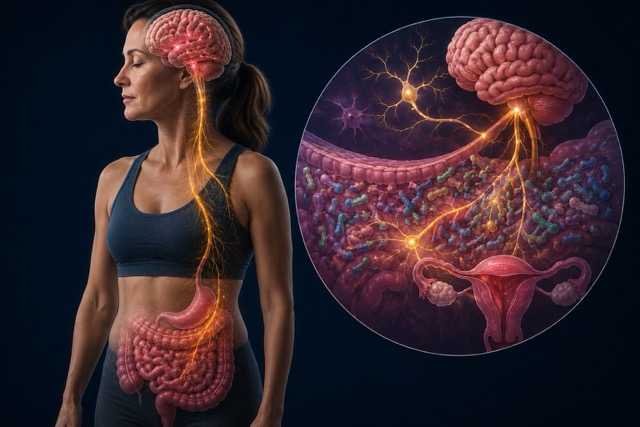
As we go through menopause, oestrogen levels drop, and that change affects much more than just our periods. Lower oestrogen can slow down our metabolism, make it easier to gain weight (especially around our waistline), and increase the risk of conditions such as high blood pressure, high cholesterol, and insulin resistance. It can also make hot flushes and night sweats worse, which is one of the main reasons we seek help during menopause.
We are living on average one-third of our lives in menopause, so we must understand how to manage and prevent some of the health challenges that can come with this stage of life, so we can actually enjoy it, not “try to get by”.
One area that can’t be neglected is the gut microbiome, or the community of bacteria living in our gut. These microbes play a big role in regulating weight, metabolism, inflammation, and overall health.
Gut microbiome changes during menopause
We now know that menopause shifts the balance of bacteria in the gut, mainly due to the drop in oestrogen levels. This change reduces both the diversity and the number of helpful microbes. Lower microbiome diversity results in inflammation, weight gain, and a higher risk of metabolic conditions such as type 2 diabetes.
On top of that, oestrogen actually helps keep the gut lining strong. When estrogen drops, the gut can become more permeable or “leaky”, allowing bacteria to slip through to the bloodstream, triggering immune and inflammatory responses, which inturn may mean weight gain, fatigue and poor metabolic health.
The good news? There are things we can do to support our gut and protect our health during this time, and that’s what I will cover in this blog.
How Oestrogen and the Gut Work Together
The liver processes most of our oestrogen. Once broken down, oestrogen metabolites can be sent into the gut through bile, a fluid involved in fat digestion.
In the lower intestine, certain gut bacteria produce enzymes that can reactivate some of this oestrogen, allowing a portion of it to be reabsorbed back into circulation. This process is known as enterohepatic circulation and helps regulate oestrogen availability in the body.
The group of gut bacteria involved in oestrogen metabolism is often referred to as the estrobolome. Changes in the balance of these bacteria may influence how much estrogen is reactivated and reabsorbed.
How a Disrupted Gut Microbiome Affects Your Body
People with a more diverse gut microbiome tend to have higher levels of oestrogen metabolites in their urine. This suggests that the gut microbiome plays a role in how oestrogen is metabolised and processed in the body.
When gut bacteria are disrupted, for example after taking antibiotics, this balance can change. Antibiotics can reduce certain bacteria that produce enzymes involved in estrogen metabolism.
As a result, less estrogen may be reactivated in the gut and more of it may be excreted in stool rather than recycled back into circulation. Some studies have shown increased fecal estrogen loss after antibiotic use, suggesting that the gut microbiome plays a role in regulating estrogen availability in the body.
In short, a healthy gut helps our body hang on to and use estrogen properly. An unhealthy or imbalanced gut makes it harder for your body to do that.
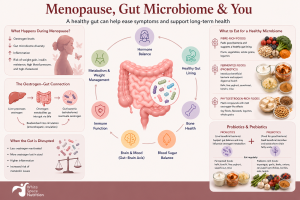
How Diet Can Help Support a Healthy Microbiome During Menopause
The gut microbiome plays a role in regulating metabolism, immune function, inflammation, hormone balance, brain health, and even bone health. Because of this, finding ways to support the microbiome during and after menopause is important, and one of the best places to start is with what we eat.
What you feed your body also feeds your gut bacteria. Diet has a strong influence on the diversity and balance of the gut microbiome. The encouraging part is that dietary changes can begin to influence the microbiome relatively quickly.
What to Eat to Support your Gut Microbiome
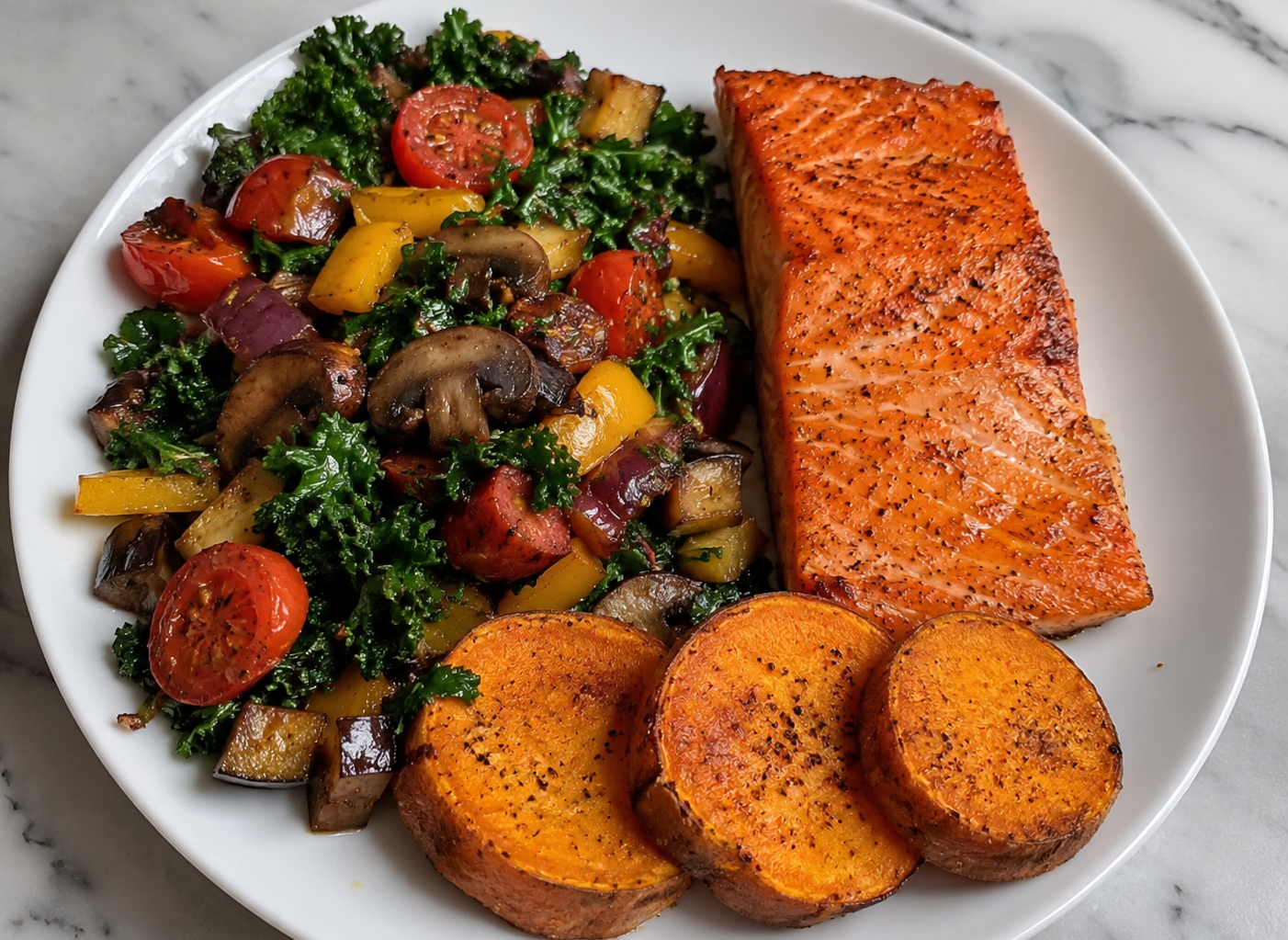
One simple way to support gut health is by eating more fibre-rich foods. Fibre acts as fuel for beneficial gut bacteria and helps maintain a healthy gut lining. It also keeps digestion regular, which is important for hormone balance and the elimination of excess estrogen.
Foods rich in fibre include: fruits, vegetables, whole grains and legumes.
Including fermented foods in your diet may also help support a healthy microbiome. Fermented foods contain live microorganisms that can contribute to microbial diversity in the gut and may support digestive and metabolic health. Foods such as kefir, live yoghurt, sauerkraut, kimchi, and miso are simple ways to introduce these beneficial microbes into your diet.
Some of these foods also contain phytoestrogens, natural plant compounds that have mild estrogen-like effects in the body. Foods such as soy products, flaxseeds, legumes, and whole grains contain these compounds. Some research suggests that diets including phytoestrogen-rich foods may support metabolic health in postmenopausal women and may help improve blood sugar control and body composition.
Probiotics, Prebiotics, and Menopause
Another area being explored is the role of probiotics (live beneficial bacteria) and prebiotics (types of fibre that feed gut bacteria) in supporting metabolic health during and after menopause.
Some probiotic strains may influence gut bacteria involved in oestrogen metabolism. Prebiotic fibres help nourish beneficial microbes and support the production of short-chain fatty acids, compounds produced by gut bacteria that play an important role in gut health, inflammation, and metabolism.
Animal studies and some early human research suggest that supporting the gut microbiome with prebiotic fibres may help improve markers of metabolic health, including body weight and blood sugar regulation during menopause. However, more research in humans is still needed.
In practical terms, this means regularly eating foods that support beneficial bacteria. Fermented foods provide natural sources of probiotics, while fibre-rich foods such as asparagus, garlic, leeks, onions, Jerusalem artichokes, berries, oats, and lentils act as prebiotics that feed the beneficial microbes already living in your gut.
Final Thoughts
The connection between menopause, metabolism, and the gut microbiome is a fascinating and growing area of research. While we still have a lot to learn, one thing is clear: what we eat and how we care for our gut can make a big difference.
Focusing on a fibre-rich, whole food diet, and supporting your gut with probiotics or prebiotics could be a simple but powerful way to ease menopause symptoms and support long-term health.
References:
Becker, S. & Manson, J. (2021). Menopause, the gut microbiome, and weight gain: correlation or causation?. Menopause, 28 (3), 327-331. doi: 10.1097/GME.0000000000001702.
Bolca S, Possemiers S, Herregat A, et al. Microbial and dietary factors are associated with the equol producer phenotype in healthy postmenopausal women. J Nutr 2007; 137:2242–2246.[Context Link]
Lampe JW, Karr SC, Hutchins AM, Slavin JL. Urinary equol excretion with a soy challenge: influence of habitual diet. Proc Soc Exp Biol Med 1998; 217:335–339.[Context Link]
Mu Y, Kou T, Wei B, et al. Soy products ameliorate obesity-related anthropometric indicators in overweight or obese Asian and non-menopausal women: a meta-analysis of randomized controlled trials. Nutrients 2019; 11:2790.[Context Link]
Panneerselvam S, Packirisamy RM, Bobby Z, Elizabeth Jacob S, Sridhar MG. Soy isoflavones (Glycine max) ameliorate hypertriglyceridemia and hepatic steatosis in high fat-fed ovariectomized Wistar rats (an experimental model of postmenopausal obesity). J Nutr Biochem 2016; 38:57–69.[Context Link]
Setchell KD, Clerici C. Equol: history, chemistry, and formation. J Nutr 2010; 140:1355S–1362S.[Context Link
Zhang YB, Chen WH, Guo JJ, et al. Soy isoflavone supplementation could reduce body weight and improve glucose metabolism in non-Asian postmenopausal women–a meta-analysis. Nutrition 2013; 29:8–14.[Context Link]